
"coffee tree cultivation"
9000 article(s) found
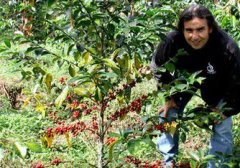
Comparison of three major coffee farms in Colombia: coffee varieties. Shading trees and fermentation treatment
Professional barista communication please follow the coffee workshop (Wechat official account cafe_style) this time is about three Colombian coffee farms, the first La Palma y El Tcan is attracted by their fermentation methods, the other Finca Santuario is because the author recently bought their love elixir, so want to know more, the third is Finca Santuario

Coffee knowledge Fine Coffee basic knowledge
Coffee (scientific name: Coffea arabica), also known as coffee tree, Arabica coffee, etc., is the national flower of Yemen. Before the 6th century in the park, Yemen was called Arab, so the coffee trees transported from them to other places were also called Arabian coffee trees. The name coffee comes from the Arabic Qahwah, which means plant drink. Later, the coffee spread all over the world, and it was picked.

Basic knowledge of boutique coffee
Coffee (scientific name: Coffea arabica), also known as coffee tree, Arabica coffee, etc., is the national flower of Yemen. Before the 6th century in the park, Yemen was called Arab, so the coffee trees transported from them to other places were also called Arabian coffee trees. The name coffee comes from the Arabic Qahwah, which means plant drink. Later, the coffee spread all over the world, and it was picked.

The basics of coffee cultivation the types of coffee beans
What is coffee? Coffee is the fruit of a Rubiaceae plant growing about 6000 feet above sea level, distributed on the world's narrow subtropical axis; coffee trees grow green all the year round and can grow up to 20 feet tall, and are generally controlled at 8 to 10 feet for easy harvest. It takes three to five years for the coffee tree to bear fruit. First of all, it produces small white flowers that resemble jasmine in shape and size.

Basic knowledge of boutique coffee
Coffee (scientific name: Coffea arabica), also known as coffee tree, Arabica coffee, etc., is the national flower of Yemen. Before the 6th century in the park, Yemen was called Arab, so the coffee trees transported from them to other places were also called Arabian coffee trees. The name coffee comes from the Arabic Qahwah, which means plant drink. Later, the coffee spread all over the world, and it was picked.

Which countries and regions can grow coffee? Why? Where does coffee come from? Coffee
Since coffee trees are tropical plants, they need to be planted in warm places. The main planting area is distributed between latitude 25 south and latitude 25 north with the equator as the center, so this area is also called the coffee belt. However, even in the coffee belt, Arabica and Robeska do not grow in exactly the same area, but grow up in an environment that is more suitable for their own growth.

A brief introduction to the cultivation of fruit-flavored Colombian Huilan boutique coffee beans, geography, climate and altitude
Export and management of Colombian coffee compared with other producing countries, Colombia is more concerned with developing products and promoting production. It is this, coupled with its superior geographical and climatic conditions, that makes Colombian coffee excellent in quality and delicious and famous all over the world. The status of coffee in Colombia is evident in the following example: all vehicles entering the country must be sprayed to avoid inadvertent disinfection.
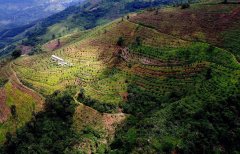
How to plant a coffee tree? The natural conditions of coffee cultivation and the skills of growing coffee.
How to grow coffee well? First of all, geographically, the golden planting belt of coffee is centered on the equator, covering the appropriate temperature from 25 north latitude to 25 south latitude. Coffee likes a warm environment, hardy but not hardy, and the most suitable planting temperature is between 16 degrees Celsius and 21 degrees Celsius. Good land environment, fertile soil. The most suitable soil for growing coffee is in the plains and mountains.

What conditions are needed to grow coffee trees Philippine coffee and domestic is better than there
The origin of coffee trees is Ethiopia in Africa. Coffee tree in botany, belongs to the Rubiaceae coffee subgenus evergreen tree, and generally known as coffee beans, survey is the coffee tree fruit seeds, only because the shape like beans, so called coffee beans. Climate is the decisive factor in coffee cultivation, coffee trees are only suitable for growing in tropical or subtropical

A brief introduction to the cultivation of high-quality and pollution-free boutique coffee beans in Uganda, geographical location, climate and altitude
The cultivation of coffee in Uganda is all small-scale family operation. The livelihood of 25% of the population is closely related to coffee production. About 500000 farms grow coffee, but mainly Robster. Robusta accounts for 90% of coffee production, and the remaining 1 is Arabica coffee. Arabica and Robusta are harvested from October to February. Ugandan coffee

Cultivation of Coffee Tree Seedling how to raise Coffee Tree
Tree name: coffee family: the morphological characteristics of evergreen trees of the subgenus Rubiaceae Coffee is a perennial evergreen shrub or small tree of Rubiaceae. It is a horticultural perennial cash crop with the characteristics of fast growth, high yield, high value and wide market. Wild coffee trees can grow up to 5 to 10 meters tall, but coffee trees planted on the manor, in order to increase fruit and facilitate harvesting

What are the conditions for growing coffee trees? is there tannin in the coffee?
The planting conditions of coffee trees the origin of coffee trees is in Ethiopia, Africa. In botany, coffee trees belong to the evergreen trees of the subgenus Rubiaceae, and coffee beans, commonly known as coffee beans, are the seeds of the fruit of coffee trees, just because they are shaped like beans, so they are called coffee beans. Climate is the decisive factor for coffee cultivation, and coffee trees are only suitable for growing in the tropics or subtropics.

Daily management of coffee cultivation 1 serving of espresso caffeine
The main results are as follows: 1. The root system of intercropping coffee elongates with the growth of plant, and the root growth range is beyond the range of planting hole half a year after planting. Therefore, it is best to dig deeply from half a year to one year before the rainy season comes, and the depth should be 0.4-0.5 meters according to soil conditions and root distribution. 2. To fertilize coffee, it is necessary to master the type and amount of fertilizer, not only an appropriate amount, but also an appropriate amount.

The aroma of coffee is cultivated when coffee trees grow up.
In a coffee obsession like mine, there is no smell comparable to the smell in the coffee field during the flowering period. The first flowering period of the coffee tree is about three years. The white flowers are five-petal tube-shaped flowers, with a faint fragrance of jasmine, and the inflorescences are arranged in dense clusters. It will wither after two or three days of flowering and begin to bear fruit after a few months. In Yunnan, this is the right time.

Coffee knowledge is an evergreen shrub of Rubiaceae.
Coffee (scientific name: Coffea arabica), also known as coffee tree, Arabica coffee, etc., is the national flower of Yemen. Before the 6th century in the park, Yemen was called Arab, so the coffee trees transported from them to other places were also called Arabian coffee trees. The name coffee comes from the Arabic Qahwah, which means plant drink. Later, the coffee spread all over the world, and it was picked.

The establishment of a coffee garden
1. The environmental conditions of land selection, planning and reclamation are closely related to the growth and development of coffee, which should be determined according to the growth habits and environmental requirements of coffee. Try to avoid choosing lowlands where cold air is easy to accumulate and condense frost; coffee roots are good, so choose well-drained and loose soil; coffee needs a calm wind environment, so in areas where there is no primary forest, consideration should be given to planning windbreaks.
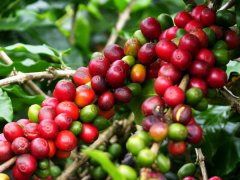
Which countries and regions can grow coffee? What conditions do you need to grow coffee?
Since coffee trees are tropical plants, they need to be planted in warm places. The main planting area is distributed between latitude 25 south and latitude 25 north with the equator as the center, so this area is also called the coffee belt. However, even in the coffee belt, Arabica and Robeska do not grow in exactly the same area, but grow up in an environment that is more suitable for their own growth.
Cultivation of small Coffee in Yunnan
Small-grain coffee is suitable for living in mountains with an altitude of 800 to 1800 meters. If the altitude is too high, it will taste sour, and if it is too low, it will taste bitter. Small grains of coffee are mostly planted in dry and hot valleys at an altitude of 1100 meters above sea level, so they are moderately sour, rich and mellow.

Where are the areas suitable for coffee cultivation? coffee trees are mainly distributed in the equator.
Professional coffee knowledge exchange more coffee bean information please follow the coffee workshop (Wechat official account cafe_style) front street-coffee planting zone introduction people all know that the growth environment of coffee is very strict, does not have certain environmental conditions, coffee can not exist, so it has caused the phenomenon that coffee is very precious. But what places on earth are suitable for coffee?

Coffee tree growth habits, distribution Coffee tree planting knowledge
The coffee tree is native to Ethiopia in Africa. Coffee tree in botany, belongs to the Rubiaceae coffee subgenus evergreen tree, and generally known as coffee beans, in fact, coffee tree fruit seeds, only because of the shape like beans, so called coffee beans. Climate is the decisive factor for coffee cultivation. Coffee trees are only suitable for growing in the tropics or subtropics, so latitude 25 degrees north and south.